Discount Filters
Which Fridge Water Filter Fits?
Mar
Most wrong filter orders happen for one simple reason: shoppers search by refrigerator brand when they should be checking the exact model or filter part number. A Samsung refrigerator does not use one universal Samsung filter. The same goes for Frigidaire, LG, Bosch, Whirlpool, GE, Kenmore, and Sub-Zero. If you are asking which refrigerator water filter fits my model, the fastest path is matching the refrigerator model number to the correct replacement filter, then confirming the filter shape, housing style, and certification details before you buy.
Which refrigerator water filter fits my model?
The short answer is that fit depends on three things: the refrigerator model number, the original filter part number, and the physical filter design inside your unit. If all three line up, you are usually looking at the right replacement. If only one matches, you should pause before ordering.
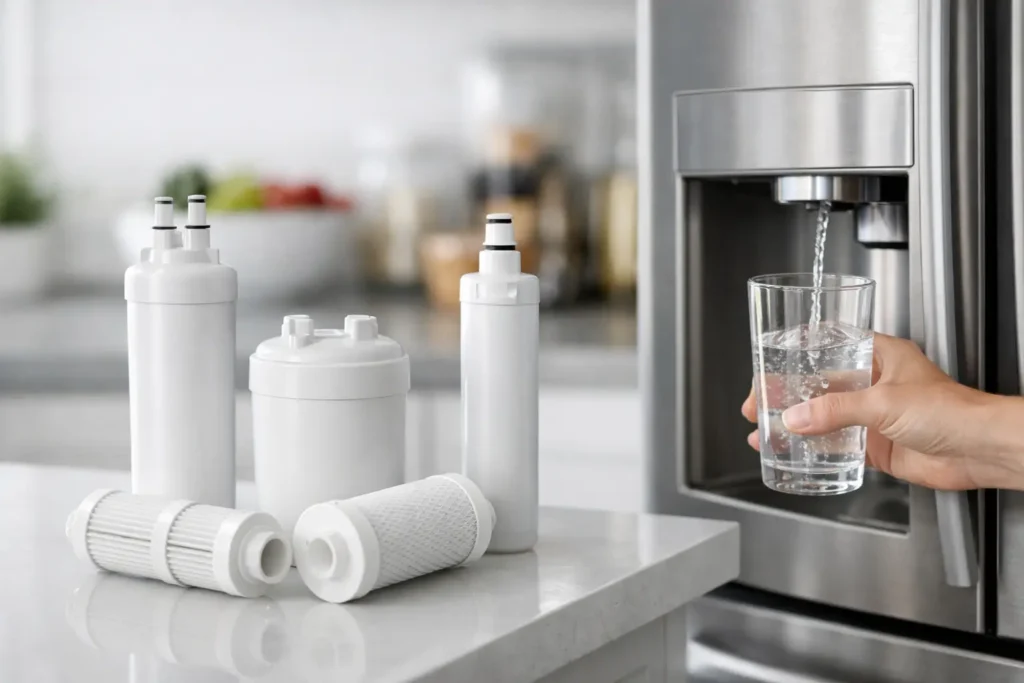
That matters because many filters look similar online. Quarter-turn cartridges, push-in filters, and slide-out designs can appear almost identical in photos. But a small difference in the head connection, locking tabs, gasket position, or cartridge length is enough to cause leaks, poor water flow, or a filter that will not seat at all.
For most households and offices, the goal is simple: get the correct filter, install it once, and move on. That is why compatibility should come before price, and then price should help you choose between OEM and aftermarket-compatible options.
Start with the refrigerator model number
If you want the highest-confidence match, begin with the refrigerator model number from the appliance itself. Do not rely only on the owner’s manual if the refrigerator has changed hands or the manual is missing. The model number label is usually found on the inside wall of the fresh food section, behind a crisper drawer, on the ceiling near the light housing, or on the frame near the door.
Once you have the model number, match it exactly, including letters, hyphens, and suffixes. Those last few characters matter. Manufacturers often use near-identical model families that take different filters depending on production year or internal filter head design.
This is where shoppers save time by using a compatibility-driven catalog instead of browsing general appliance parts. On a site like Discount Filter Shop, filters are organized by brand, part number, and fitment so you can narrow the field quickly instead of guessing from product images.
Why the model number beats the brand name
Brand-only searches create false confidence. A refrigerator branded Kenmore may use a filter made by LG, Whirlpool, or another OEM supplier depending on the model line. A Bosch built-in and a Bosch freestanding unit may also use different cartridges. The model number cuts through that confusion.
If the model number search returns multiple possible filters, that usually means one of two things. Either the refrigerator had a running production change, or there are OEM and compatible equivalents listed together. In that case, move to the original filter part number for confirmation.
Check the old filter part number next
If the current filter is still installed, remove it and look for the part number printed on the label. This is often the cleanest way to answer which refrigerator water filter fits my model because the manufacturer already spec’d that cartridge for your refrigerator.
Common examples include numbers like DA29-00020B, UKF8001, EDR4RXD1, ULTRAWF, 4396841, 847200, or 644845. If you have one of those numbers on the existing cartridge, you can shop by part number and then compare compatible replacements that match that exact spec.
There is one catch. Sometimes the old filter is not original. Previous owners, tenants, or maintenance staff may have installed a substitute. If the label looks generic or does not match the refrigerator brand, do not assume it is correct just because it fit once. Verify it against the refrigerator model number and the filter housing design.
What if the old filter label is worn off?
That is common, especially if the filter stayed in too long or the label got wet. If you cannot read the part number, compare the installation style. Ask these questions while looking at the old filter and housing:
Does it twist a quarter turn or push straight in?
Is the filter inside the upper-right interior corner, in the grille at the base, or external on the back line?
Does it have a cap that transfers from the old cartridge to the new one?
How long is the cartridge, and where are the O-rings and alignment tabs?
Those details help rule out lookalike replacements that will not lock properly.
Match the filter style, not just the label
Physical compatibility matters as much as the printed number. Refrigerator filters generally fall into a few installation types, and mixing them up is a fast way to get the wrong part.
Internal push-in filters are common in newer side-by-side and French door refrigerators. These typically click into a housing in the upper-right corner. Quarter-turn filters twist into place and are often found in older Whirlpool-family designs or base grille systems. Some refrigerators use an external inline filter mounted on the water line behind the appliance. Others, especially premium built-in units, use brand-specific cartridges with unique dimensions.
Even when a filter claims compatibility, the cartridge must line up with the head connection and seal correctly under water pressure. A poor fit may still install halfway, which is sometimes worse than an obvious mismatch because leaks can show up later.
OEM vs aftermarket-compatible filters
Once fit is confirmed, the next question is usually whether to buy OEM or a compatible replacement. For many shoppers, this comes down to price and certification.
OEM filters are made by or for the refrigerator brand. They are the default choice for buyers who want the exact original replacement and are comfortable paying more. Aftermarket-compatible filters are built to match the fit and performance profile of the original part number, often at a lower cost. That lower price is attractive when you are replacing filters every 6 months and managing multiple refrigerators in a household or office.
The key is to compare specs instead of assuming all compatible filters are equal. Look for NSF/ANSI 42 for chlorine taste and odor reduction. NSF/ANSI 53 covers reduction claims for specific health-related contaminants on qualifying models. NSF/ANSI 401 may apply to select emerging contaminants, and NSF 372 addresses lead-free material requirements. Activated carbon block media is a common and trusted filtration format because it balances reduction performance and flow rate well in refrigerator applications.
A discount price only helps if the filter is actually compatible and certified for the claims you care about.
Replacement interval still matters after you find the right fit
A correctly fitted filter can still perform poorly if it is overdue for replacement. Most refrigerator water filters are rated for about 6 months of service or roughly 200 to 300 gallons, depending on the model and household use.
Heavy ice use, sediment in the incoming water supply, and long periods between changes can all affect performance. If your water tastes flat, smells off, dispenses slowly, or the ice starts carrying odor, the filter may be spent even if the change reminder has not been reset properly.
If you are comparing products, check service life, flow rate, operating pressure, and operating temperature along with compatibility. Those practical specs tell you more than branding alone.
Red flags that suggest you have the wrong filter
If the new filter will not rotate fully, will not click into place, or springs back out of the housing, stop there. Do not force it. The same goes for a filter that installs but causes immediate leaking, sputtering that does not clear after flushing, or a filter door that will not close.
Another warning sign is a refrigerator that keeps showing a filter error or low-flow issue after a fresh install and reset. Sometimes that points to air in the line or a reset problem, but it can also mean the cartridge is not engaging the head assembly correctly.
This is where exact part-number matching and product specs reduce expensive trial and error.
The fastest way to buy correctly
If you want to avoid a return, use a simple order of operations. Find the refrigerator model number first. Check the old filter part number second. Compare the installation style third. Then review certifications, media type, and service life so you know what you are actually buying.
For budget-conscious shoppers, that process usually reveals two or three valid options instead of dozens of maybe-fits. At that point, price, free shipping, and stock availability become useful tie-breakers rather than risky shortcuts.
If you are maintaining several units, save the confirmed filter part number once you find it. That turns the next replacement into a quick reorder instead of another compatibility search.
The right refrigerator water filter should not be a mystery purchase. When the model number, part number, and filter design all agree, you can buy with a lot more confidence and a lot less hassle.