Discount Filters
Activated Carbon Block Refrigerator Filter
Mar
Bad-tasting water from the fridge usually sends people in the wrong direction. They assume the refrigerator is old, the plumbing is the issue, or any cheap replacement will do the job. In many cases, the real difference comes down to the filter media inside the cartridge – and that is where an activated carbon block refrigerator filter stands apart.
If you are replacing a fridge water filter, this matters for two reasons. First, performance is not just about whether the filter fits. Second, not every compatible replacement uses the same media, certifications, or service life. If you want better taste, better odor reduction, and more confidence in what your filter is actually doing, carbon block is worth understanding before you buy.
What an activated carbon block refrigerator filter actually is
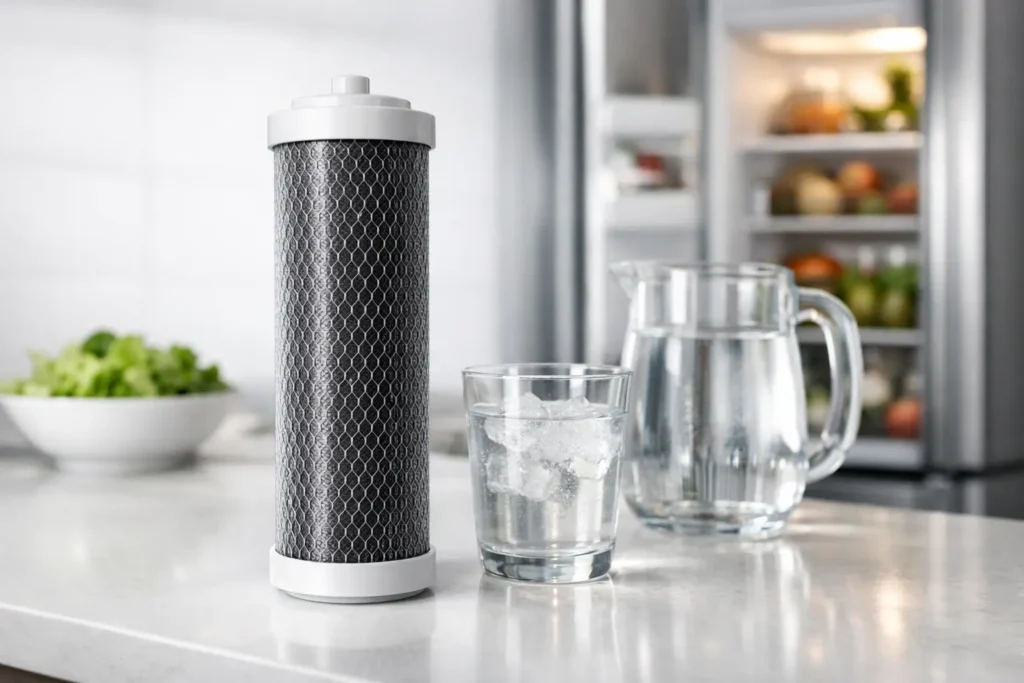
An activated carbon block refrigerator filter uses compressed activated carbon formed into a dense block rather than loose granular media. Water passes through that carbon structure, which is designed to reduce chlorine taste and odor and, depending on the model and certification, additional contaminants such as sediment, cysts, lead, or certain emerging chemicals.
That block format is a big part of the appeal. Because the carbon is tightly packed, the filter can provide more contact time between water and media. More contact time generally supports better reduction performance than a looser fill, assuming the filter is properly designed for your refrigerator’s flow rate and pressure range.
For fridge owners, the result is practical. Water tastes cleaner. Ice smells better. You get a filter that often supports stronger contaminant reduction claims than basic alternatives, especially when those claims are backed by NSF/ANSI certifications.
Why carbon block is common in refrigerator filters
Refrigerator filtration has a narrow job description. The filter has to fit a specific housing, operate at household water pressure, maintain acceptable flow to the dispenser and ice maker, and improve water quality without adding installation hassle. Activated carbon block fits that use case well.
It is especially effective for chlorine taste and odor reduction, which is one of the most common complaints with municipal water. It also works within the compact design limits of refrigerator cartridges. That is why many OEM and aftermarket-compatible refrigerator water filters use carbon block media as their core filtration technology.
That said, media alone does not tell the whole story. Two filters can both be labeled carbon block and still perform differently. Carbon quality, block density, micron rating, flow design, and certification testing all affect what the filter can reliably reduce.
What an activated carbon block refrigerator filter can reduce
For most shoppers, the first benefit is taste. Chlorine and related odor compounds are what make refrigerator water seem flat, chemical-like, or unpleasant. A carbon block filter is well suited for improving both.
Beyond taste and odor, performance depends on the individual filter. Some are certified to NSF/ANSI 42 for aesthetic effects like chlorine reduction. Others also carry NSF/ANSI 53 for health-related contaminant reduction, and some may include NSF/ANSI 401 for selected emerging contaminants. You may also see NSF 372, which relates to lead-free material compliance.
This is where buying by specs matters. If you need basic taste and odor improvement, a standard carbon block filter may be enough. If you are specifically looking for lead reduction, cyst reduction, or broader contaminant claims, you need to confirm the certification and product details for that exact replacement filter.
Activated carbon block vs. granular carbon
Some buyers only look at price, but filter media design affects value over the full replacement cycle. Activated carbon block and granular activated carbon are not the same thing.
Granular media uses loose carbon particles. It can still help with taste and odor, but water may move through it less uniformly. Carbon block uses a more rigid, compact structure, which usually allows for finer filtration and more consistent contact with the media.
That does not automatically mean every carbon block filter is the better buy in every situation. A well-made granular filter can be acceptable for basic aesthetic improvement. But if you are comparing replacement filters for a refrigerator and one offers activated carbon block with the right certifications at a competitive price, that usually gives you more performance confidence.
Fit matters just as much as filtration media
A high-spec filter is still the wrong filter if it does not fit your refrigerator. This is one of the most common reasons for return requests and wasted time. Refrigerator filters are compatibility-sensitive parts. They are sold by brand, part number, and model fit because shape, locking mechanism, and internal valve design vary across platforms.
Before ordering, match the existing filter’s part number or verify your refrigerator model against the compatibility list. This is especially important when buying aftermarket-compatible replacements. A good replacement should not only fit physically but also maintain proper flow and seal correctly inside the housing.
At Discount Filter Shop, this is why products are organized around recognizable brands, part numbers, and compatibility-driven selection. It keeps the buying process faster and cuts down on wrong-fit orders.
How to judge quality before you buy
The safest way to compare an activated carbon block refrigerator filter is to look beyond the product title. A strong listing should tell you what the filter fits, what certifications apply, how long it lasts, and what operating conditions it is designed for.
Service life is one of the first specs to check. For many refrigerator water filters, the standard replacement interval is about 6 months or roughly 200 to 300 gallons, depending on the model. If a filter promises unusually long life without clear testing support, that is worth a second look.
Certifications also matter because they separate tested claims from generic marketing. If contaminant reduction is a priority, look for the exact NSF/ANSI standards listed on the product details. If the listing only says “premium filtration” without measurable claims, you are missing the information needed to compare it fairly.
Micron rating can be useful too, but only in context. A smaller micron number is not automatically better if it restricts flow too much or is not supported by the filter’s design. In a refrigerator, you want a balance of reduction performance, acceptable dispenser flow, and compatibility with the appliance’s pressure limits.
When an aftermarket-compatible filter makes sense
Many shoppers start by looking for the original brand filter and then pause when they see the price. That is where aftermarket-compatible options become attractive. The good ones are built to match fit and performance expectations without the premium OEM cost.
The key phrase there is good ones. A low price only helps if the filter is compatible, properly specified, and supported by clear performance details. If a replacement uses activated carbon block media, lists the correct fitment, and shows applicable certifications and service life, it can be a smart way to control maintenance costs.
For homes with multiple refrigerators, breakroom fridges, or office ice makers, the savings add up quickly over repeat replacement cycles. Free shipping also matters more than people expect when the product itself is relatively small and bought on schedule every 6 months.
Installation and replacement timing
Most refrigerator water filters are designed for quick replacement, but timing is where many users slip. They wait until the water tastes bad, the ice smells off, or the dispenser slows down. By then, the filter is overdue.
A better approach is simple: replace on schedule. For most units, that means every 6 months, even if the filter indicator light has not become your main reminder. Heavy usage, high sediment levels, or poor incoming water quality can shorten effective life.
After installation, flush the new filter according to the manufacturer’s instructions. This helps clear carbon fines, stabilizes flow, and gets the filter ready for normal use. If a new filter leaks, feels loose, or causes unusual flow problems, stop and recheck compatibility and installation position rather than forcing it.
Is an activated carbon block refrigerator filter worth it?
For most refrigerator water filter buyers, yes. If your goal is cleaner-tasting water, better-smelling ice, and stronger confidence in contaminant reduction claims, activated carbon block is a practical choice. It is widely used for a reason.
Still, the better question is whether the specific filter you are considering combines the right media with the right fit, certifications, and replacement interval. That is where the buying decision gets smarter. A filter that fits your refrigerator correctly and clearly states what it is certified to reduce is usually a better value than a vague low-cost option that leaves you guessing.
When it is time to reorder, buy the filter that matches your part number, your refrigerator model, and your water quality priorities. That takes a routine replacement and turns it into a better-tasting, lower-hassle result every day.