Discount Filters
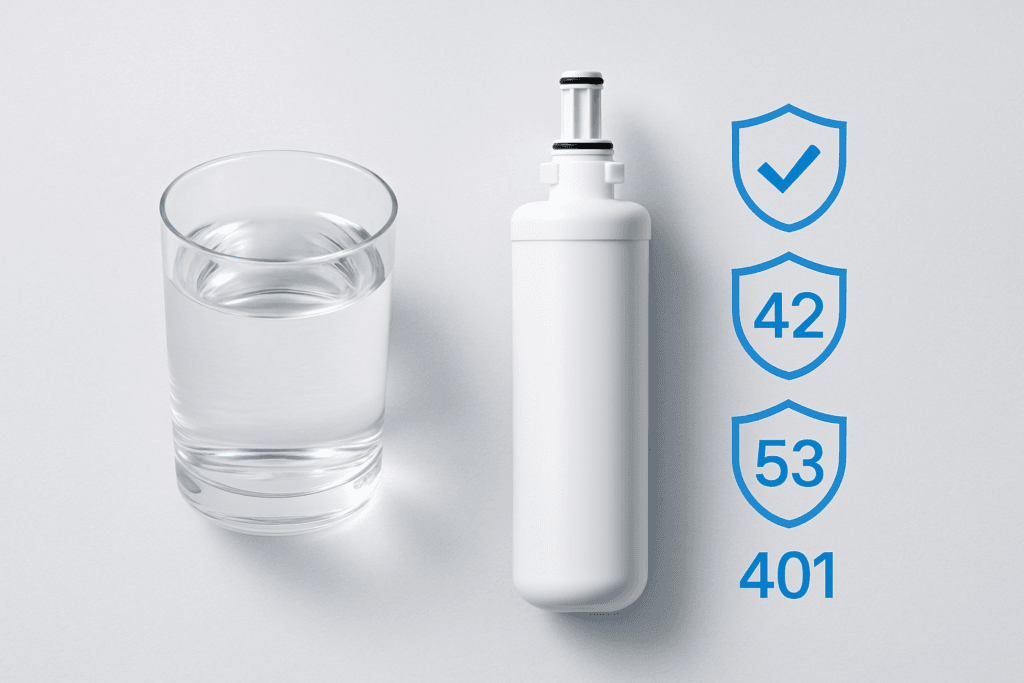
NSF 42 vs NSF 53 vs NSF 401: what do refrigerator filter certifications actually mean?
May
Three letters that tell you what your filter actually does
When you shop for a refrigerator water filter, you’ll see labels like “NSF 42,” “NSF 53,” or “NSF 401.” These aren’t marketing claims. They are certifications issued by NSF International, an independent public health organization that tests water filters to verify they remove specific contaminants.
NSF 42 — taste, odor, and aesthetics
NSF/ANSI Standard 42 covers filters that reduce aesthetic contaminants — things that affect the way water looks, tastes, or smells but are not directly harmful to health.
What NSF 42 filters remove:
- Chlorine taste and odor
- Chloramine
- Sediment and particulates
- Some volatile organic compounds (VOCs)
Every refrigerator filter sold at Discount Filter Shop carries NSF 42 certification. If a filter doesn’t have NSF 42, don’t buy it.
NSF 53 — health contaminants
NSF/ANSI Standard 53 is where water safety gets serious. This certification means the filter has been independently tested to reduce health-affecting contaminants.
What NSF 53 filters remove:
- Lead
- Mercury
- Cysts (Cryptosporidium, Giardia)
- Benzene
- Asbestos
- Some pesticides and herbicides
If you have young children, anyone with a compromised immune system, or older plumbing, choose a filter certified to both NSF 42 and 53. The majority of filters in our catalog carry both certifications, including the LG LT1000P, Samsung DA29-00020B, and GE MWF.
NSF 401 — emerging contaminants
NSF/ANSI Standard 401 is the newest certification category, addressing contaminants only recently recognized as concerns in drinking water.
What NSF 401 filters reduce:
- Pharmaceuticals (ibuprofen, naproxen, estrone)
- Herbicides and pesticides (DEET, metolachlor)
- Bisphenol A (BPA)
- Microplastics
Filters with NSF 401 include the GE XWFE, Samsung HAF-QIN, and Bosch UltraClarity Pro.
Which certification level do you need?
| Your situation | Recommended certification |
|---|---|
| Municipal water, healthy adults | NSF 42 + 53 |
| Older home or plumbing | NSF 42 + 53 (lead reduction) |
| Young children or pregnant women | NSF 42 + 53 + 401 |
| Concerned about pharmaceuticals | NSF 401 |
| Private well water | NSF 42 + 53 minimum; get water tested |
Browse NSF-certified filters — free US shipping
Browse all NSF-certified water filters →
Frequently asked questions
Is NSF 401 better than NSF 53?
They cover different contaminants. NSF 53 covers health contaminants like lead and cysts. NSF 401 covers emerging contaminants like pharmaceuticals and BPA. The best filters carry all three certifications: NSF 42 + 53 + 401.
Does NSF certification mean the filter is safe?
NSF certification means the filter has been independently tested and verified to reduce the contaminants listed in that standard. It does not mean the filter removes all possible contaminants — only those covered by the specific standard(s) it’s certified for.
How do I know if my refrigerator filter is NSF certified?
The NSF certification is printed on the filter label or packaging. You can also search the filter model number on the NSF certified products database at nsf.org to verify independently.
Is an uncertified filter dangerous?
An uncertified filter has not been independently verified. It may remove contaminants effectively, or it may not. Without NSF certification, there is no third-party proof. For drinking water, always choose NSF-certified filters.