May 12, 2026
NSF 42 vs NSF 53 vs NSF 401: what do refrigerator filter certifications actually mean?
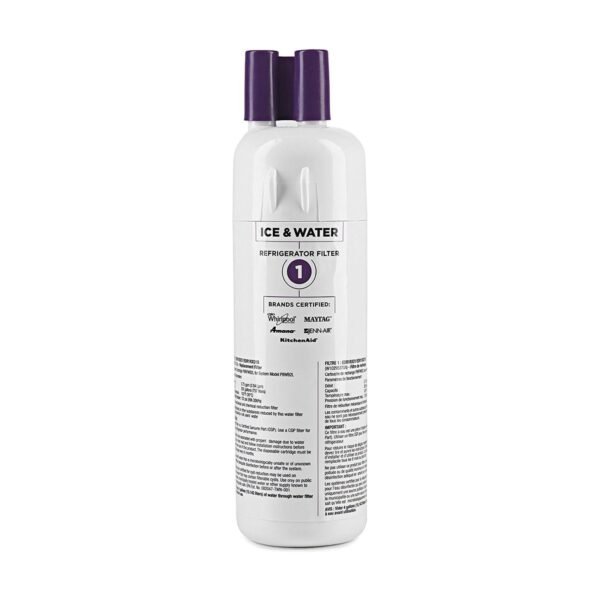
Three letters that tell you what your filter actually does
When you shop for a refrigerator water filter, you’ll see labels like “NSF 42,” “NSF 53,” or “NSF 401.” NSF/ANSI 42, 53 and 401 are American national standards. Accredited certifiers (NSF International, IAPMO R&T or WQA) test a filter against them and list the specific contaminants it is certified to reduce.
NSF 42: taste, odor, and aesthetics
NSF/ANSI Standard 42 covers filters that reduce aesthetic contaminants, things that affect the way water looks, tastes, or smells but are not directly harmful to health.
What NSF 42 filters can be certified to reduce:
- Chlorine taste and odor
- Chloramine
- Sediment and particulates
Certifications are issued by accredited bodies (NSF International, IAPMO R&T, WQA) to the manufacturer of each filter, not to Discount Filter Shop, and we do not make certification or contaminant-reduction claims on our product pages. To check what a specific filter is certified to reduce, search its exact model number in the public listings of NSF International, IAPMO R&T or WQA, or read the performance data sheet published by its manufacturer.
NSF 53: health contaminants
NSF/ANSI Standard 53 covers contaminants with health-based limits. A filter certified to it has been independently tested to reduce the specific contaminants listed in its certification.
What NSF 53 filters can be certified to reduce (check the listing for each claim):
- Lead
- Mercury
- Cysts (Cryptosporidium, Giardia)
- Benzene
- Asbestos
- Volatile organic compounds (VOCs)
- Some pesticides and herbicides
NSF 401: emerging contaminants
NSF/ANSI Standard 401 is the newest certification category, addressing contaminants only recently recognized as concerns in drinking water.
What NSF 401 filters can be certified to reduce:
- Pharmaceuticals (ibuprofen, naproxen, estrone)
- Herbicides and pesticides (DEET, metolachlor)
- Bisphenol A (BPA)
- Microplastics
Which standard covers which contaminant?
| Contaminant | Standard to look for in the listing |
|---|---|
| Chlorine taste and odor | NSF/ANSI 42 |
| Lead | NSF/ANSI 53 |
| Cysts (Cryptosporidium, Giardia) | NSF/ANSI 53 |
| VOCs | NSF/ANSI 53 |
| PFOA and PFOS | NSF/ANSI 53 or NSF P473, with an explicit PFOA/PFOS claim |
| Certain pharmaceuticals, BPA | NSF/ANSI 401 |
Which you need depends on what is in your water. If you have health concerns about your water, test it and follow your utility’s or doctor’s guidance. Private well owners should have their water tested.
Browse refrigerator water filters
Frequently asked questions
Is NSF 401 better than NSF 53?
They cover different contaminants. NSF 53 covers health contaminants like lead and cysts. NSF 401 covers emerging contaminants like pharmaceuticals and BPA. Which you need depends on what is in your water.
Does NSF certification mean the filter is safe?
NSF certification means the filter has been independently tested and verified to reduce the contaminants listed in that standard. It does not mean the filter removes all possible contaminants, only those covered by the specific standard(s) it’s certified for.
How do I know if my refrigerator filter is certified?
The certification mark (NSF, IAPMO or WQA) is printed on the filter label or packaging. You can also search the filter model number in the public listings of the certifier (NSF, IAPMO R&T or WQA) to verify independently. Our guide on OEM vs. compatible filters and how to read the label walks through each database step by step.
Is an uncertified filter dangerous?
An uncertified filter has not been independently verified. Its performance has not been verified by a third party. Without a certification from an accredited body such as NSF, IAPMO R&T or WQA, there is no third-party proof. For drinking water, choose filters certified to these standards.