October 31, 2026
OEM vs. Compatible Refrigerator Filters: How to Read the Label Before You Buy
Three kinds of filter, not two
Most comparisons of OEM and compatible refrigerator filters frame this as one against the other. In practice there are three categories, and the line between the second and the third is what matters for your water.
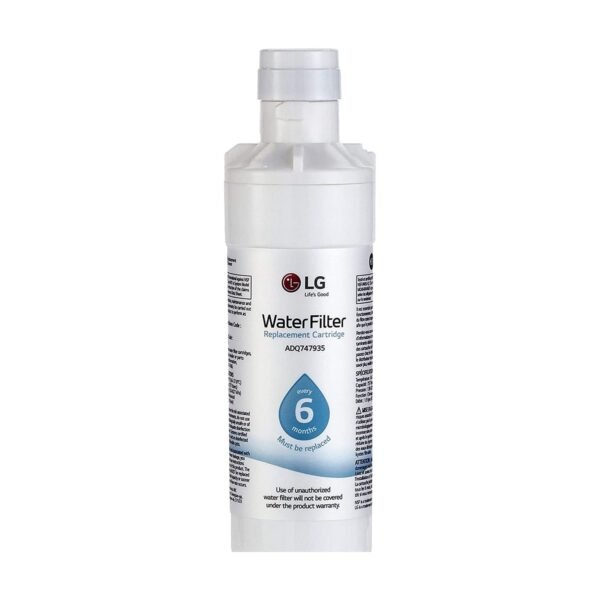
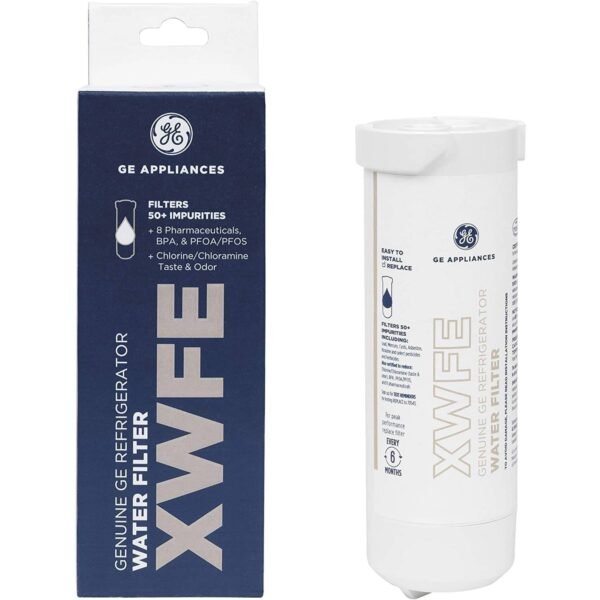
- OEM, or genuine. Made by, or under contract for, the appliance brand: everydrop for Whirlpool, GE’s XWFE, Samsung’s HAF series, LG’s LT1000P. Sold in the brand’s own packaging, with the brand’s part number.
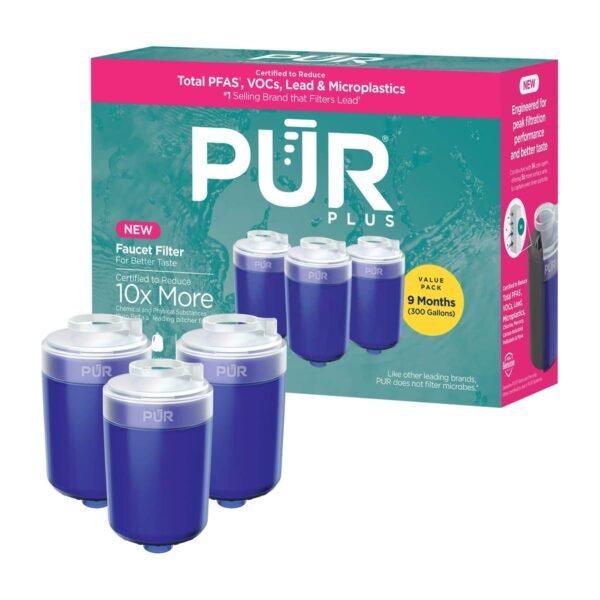
- Compatible, or aftermarket. Made by an independent manufacturer to fit the same housing. Sold under its own brand, labelled “compatible with” or “replacement for” the OEM part number. Quality ranges from fully certified to entirely unverified.
- Counterfeit. A third-party filter sold as if it were the genuine article, with copied packaging, borrowed logos and sometimes a fake certification mark. The Association of Home Appliance Manufacturers (AHAM), which runs the Filter It Out campaign with 17 appliance brands, had nearly 100 counterfeit filters tested by NSF, IAPMO and WQA. They consistently failed to remove lead and cysts, and some added contaminants to the water. U.S. Customs and Border Protection seized 3,940 fraudulent filters at the Los Angeles/Long Beach seaport in one 2023 action, and reported more than 67,000 counterfeit water filters seized there since 2021.
The label is where you tell these apart.
What a refrigerator filter does, and what it does not
Almost every refrigerator filter is a block of activated carbon in a plastic housing. Carbon adsorbs chlorine, which is why filtered fridge water tastes better. When a cartridge is designed and certified for it, the same carbon block can also reduce lead, cysts such as Giardia and Cryptosporidium, certain volatile organic compounds, some pharmaceuticals, and PFOA and PFOS.
What no refrigerator filter does: soften hard water, remove dissolved minerals, nitrates or fluoride, or disinfect bacteria and viruses (see whether a fridge filter softens water). So the list of certified claims is the product. A cartridge certified only for chlorine taste and odor is a different product from one certified for lead, even when the two look identical on the shelf.
Decoding the box: what each mark actually means
The standard numbers: NSF/ANSI 42, 53 and 401
Three American national standards cover the claims you will see on a refrigerator filter. NSF/ANSI 42 covers aesthetic effects such as chlorine taste and odor and particulates. NSF/ANSI 53 covers contaminants with health-based limits: lead, cysts, mercury, VOCs, and since 2019, PFOA and PFOS, with additional PFAS compounds added in the 2022 edition. NSF/ANSI 401 covers incidental and emerging contaminants such as certain pharmaceuticals, BPA and DEET. We walk through each one in NSF 42 vs 53 vs 401 explained.
The point most labels obscure: a standard is a menu, not a grade. A filter is certified only for the specific claims named in its listing. “Certified to NSF/ANSI 53” with no contaminant named is incomplete information. “Certified to NSF/ANSI 53 for lead reduction” is a claim you can check.
NSF/ANSI/CAN 372 is about the plastic, not the water
You will also see “NSF 372” on some boxes. NSF/ANSI/CAN 372 is a lead-content standard: it verifies that the parts touching water contain no more than 0.25% lead by weighted average, the federal definition of “lead free” plumbing. It says nothing about whether the filter reduces lead in your water. A label that places “NSF 372” next to the word “lead” is hoping you will not know the difference. Lead reduction is an NSF/ANSI 53 claim, and only that.
“Certified” versus “tested to NSF standards”
These phrases are not synonyms, and NSF publishes its own comparison to say so. A certified product has had its claims verified by the certifier, its factory audited, and its performance retested periodically, and it appears in a public listing anyone can search. “Tested to NSF standards” means a laboratory somewhere ran some version of a test. No independent body stands behind the result, there is no listing to consult, and nobody is checking the next production batch. Treat it as a marketing phrase, not a credential.
Three certifiers, one set of standards
NSF International, IAPMO R&T and the Water Quality Association (WQA) are all accredited to certify filters against the NSF/ANSI standards. A filter certified by IAPMO R&T to NSF/ANSI 53 has met the same requirements as one certified by NSF International. The marks look different (NSF’s circle, the IAPMO R&T shield, the WQA Gold Seal), but the standard behind them is identical. What matters is not which logo is on the box but whether that certifier’s public listing shows your exact model with the claims printed on the label.
| Phrase on the box | What it actually means | What to do |
|---|---|---|
| “Certified to NSF/ANSI 42, 53 and 401” with a certifier’s mark | A specific claim that should exist in a public listing | Look up the model number (steps below) |
| “Certified to NSF/ANSI 53” with no contaminant named | Incomplete: 53 is a menu of claims | Check which contaminants are actually listed |
| “NSF 372 certified” | Low lead content in the materials; not lead reduction | Ignore it as a performance claim |
| “Tested to NSF standards” | Unverified by any certifier | Treat as no certification |
| “Removes 99% of contaminants” | No standard, no contaminant, no basis | Walk away |
| Brand logo plus “genuine” at a third of the brand’s price | Likely counterfeit | Buy from an authorized seller instead |
How to verify any claim yourself in two minutes
Step 1: find the filter’s own model number. It is printed on the box and on the cartridge. Do not use your refrigerator’s model number, and for a compatible filter, use the compatible brand’s own model number, not the OEM part number it says it replaces. (If you are not sure which cartridge your fridge takes in the first place, start with how to find your filter model number.)
Step 2: search the NSF listings. Go to info.nsf.org/Certified/DWTU/ and type the model into the “Brand Name / Trade Name / Model” field. A listing shows the certified company, the trade name, the model, the replacement element, the rated service cycle in gallons, the flow rate, and the claims, grouped by standard. Read the footnotes. A line such as “Products comply with the material safety and structural integrity requirements of NSF/ANSI Standard 42” means the cartridge is certified for its materials and construction, and for nothing else unless a reduction claim is listed beside it. A [G] or [Pb] marker refers to NSF/ANSI/CAN 372 lead content, which, again, is not lead reduction.
Step 3: search the IAPMO R&T directory. Many OEM filters, including several GE and Frigidaire cartridges, are certified by IAPMO R&T rather than NSF. The Product Listing Directory is at pld.iapmo.org; search by model or company. IAPMO’s own certificates state that a certificate is not evidence of current listing and point you to this directory, so a PDF a seller emails you is not proof. The live directory is.
Step 4: search the WQA listings. WQA’s Gold Seal product listings are at wqa.org/find-products. Only models that appear in the listing are authorized to carry the Gold Seal.
Step 5: compare the listing to the box. If the box says lead and the listing says chlorine only, the box is wrong, whatever the logo. If the model appears in none of the three databases, the claim is unverified and you should treat the filter as uncertified.
Two details that trip people up. First, NSF warns that its listing text gets copied and altered, so confirm on the live site rather than trusting a screenshot. Second, compatible refrigerator filters are frequently listed under the name of the factory that makes them, often a company you have never heard of, with the retail brand in the trade-name column. That is normal and legitimate. What is not normal is a brand that cannot tell you which listing covers its filter.
OEM vs compatible refrigerator filters: the honest trade-offs
| Factor | OEM (genuine) | Compatible (certified) | Compatible (uncertified) |
|---|---|---|---|
| Price | Highest | Often 40 to 70% less | Lowest |
| Certification | Typically 42 and 53, often 401, listed under the brand | Listed, claims vary by model | None you can verify |
| Fit and leaks | Designed for the housing | Usually fine; check reviews for your fridge | Unknown |
| Electronic recognition | Works with chip-reading fridges | May not be recognized on some models | May not be recognized |
| Warranty | No question | Protected by law unless the part causes the fault | Same, but a leak is on you |
Price is the compatible filter’s real advantage, and for a consumable replaced every six months it adds up.
Certification is where the two diverge. Genuine filters from the major brands are typically certified to NSF/ANSI 42 and 53, and often 401, under the brand’s own name. Among compatible refrigerator filters, some are certified to all three standards and listed, many are certified to 42 only, and some carry no verifiable certification at all. The listing, not the price, tells you which kind you are holding.
Fit matters more than people expect. AHAM’s testing found counterfeits that were never designed for the housing they claimed to fit, and a cartridge that seeps at the seal can quietly damage flooring and cabinetry.
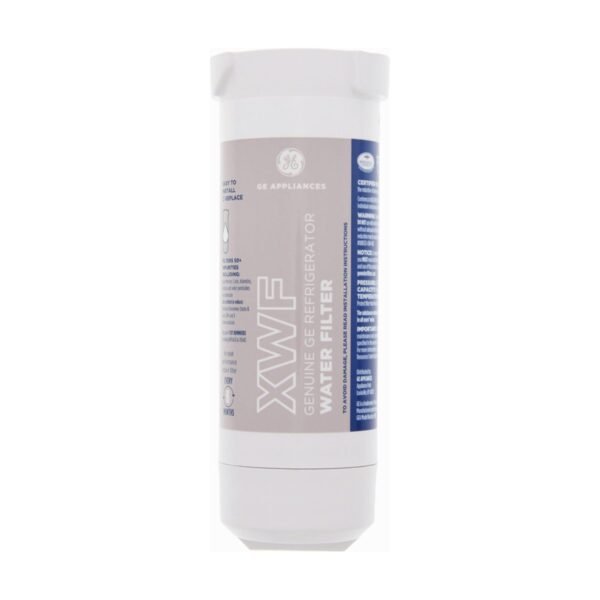
Electronics are a newer wrinkle. Some refrigerators read a chip in the cartridge, the whole story behind GE’s XWF versus XWFE. On those models a compatible without the chip may be rejected.
Warranty is governed by the federal Magnuson-Moss Warranty Act, which the FTC enforces. A manufacturer cannot void your refrigerator’s warranty simply because you used a third-party filter; it has to show that the part caused the problem. That protection is real, but it cuts both ways: if a compatible cartridge leaks and ruins the fridge, that repair is yours.
The bottom line: a certified, listed compatible is a legitimate way to save money. An uncertified compatible is a gamble. A counterfeit is a hazard.
Red flags of a counterfeit or deceptive listing
- A brand name or logo, the word “genuine,” and a price far below what the brand itself charges.
- A certification logo on the packaging but no matching entry in the NSF, IAPMO R&T or WQA listings.
- Percentage claims (“removes 99.9% of contaminants”) with no standard number and no named contaminant.
- “NSF 372” presented as if it were a performance claim.
- “Tested to NSF standards” as the only credential offered.
- A cartridge that feels noticeably lighter than the genuine one. AHAM notes that counterfeits often weigh less because they contain less carbon.
- A seller who answers a request for the listing with a PDF certificate instead of a link to the live directory.
Where we stand
Discount Filter Shop sells genuine filters in original manufacturer packaging. Our product pages do not repeat certification claims: to check a cartridge, search its exact model number in the NSF, IAPMO R&T or WQA listings, as described above. We would rather you check those listings than take our word for it. And if a compatible cartridge fits your budget better, buy one that appears in the listings with the claims you need. You can browse all refrigerator water filters here.
Frequently asked questions
Are compatible refrigerator filters safe?
A compatible filter whose model number appears in the NSF, IAPMO R&T or WQA listings has been independently verified for the claims in that listing and for the safety of its materials. One that appears in none of them has not been verified by anyone, and you should assume it reduces nothing beyond chlorine taste, if that.
How do I know if a filter is really NSF certified?
Search the exact model number at info.nsf.org/Certified/DWTU/. If it is certified by IAPMO R&T or WQA instead, search pld.iapmo.org or wqa.org/find-products. The logo on the box proves nothing by itself; the listing does.
Does using a compatible filter void my refrigerator warranty?
Not by itself. Under the Magnuson-Moss Warranty Act, the manufacturer would have to show that the filter caused the failure. If it did, for instance through a leak, that damage would not be covered.
Is an IAPMO or WQA certification as good as NSF?
Yes. All three are accredited to certify against the same NSF/ANSI standards. The standard number and the listed claims are what count, not which organization’s mark is printed on the box.
Why isn’t the brand on the box in the database?
Compatible filters are often listed under the manufacturing company, with the retail brand shown as a trade name. Search by model number rather than brand. If the model number still returns nothing, the certification claim is unverified.
Sources
- NSF Certified Drinking Water Treatment Units listings
- NSF: NSF Certified vs. Tested to NSF Standards
- NSF: NSF/ANSI/CAN 372 technical requirements
- NSF: PFOA/PFOS reduction claims added to NSF/ANSI 53 and 58
- IAPMO R&T Product Listing Directory
- WQA: Find Certified Products
- AHAM: Counterfeit Filters and the Filter It Out campaign
- U.S. Customs and Border Protection: fraudulent refrigerator water filters seized at LA/LB seaport (2023)
- FTC: Businessperson’s Guide to Federal Warranty Law (Magnuson-Moss Warranty Act)