15
May
May
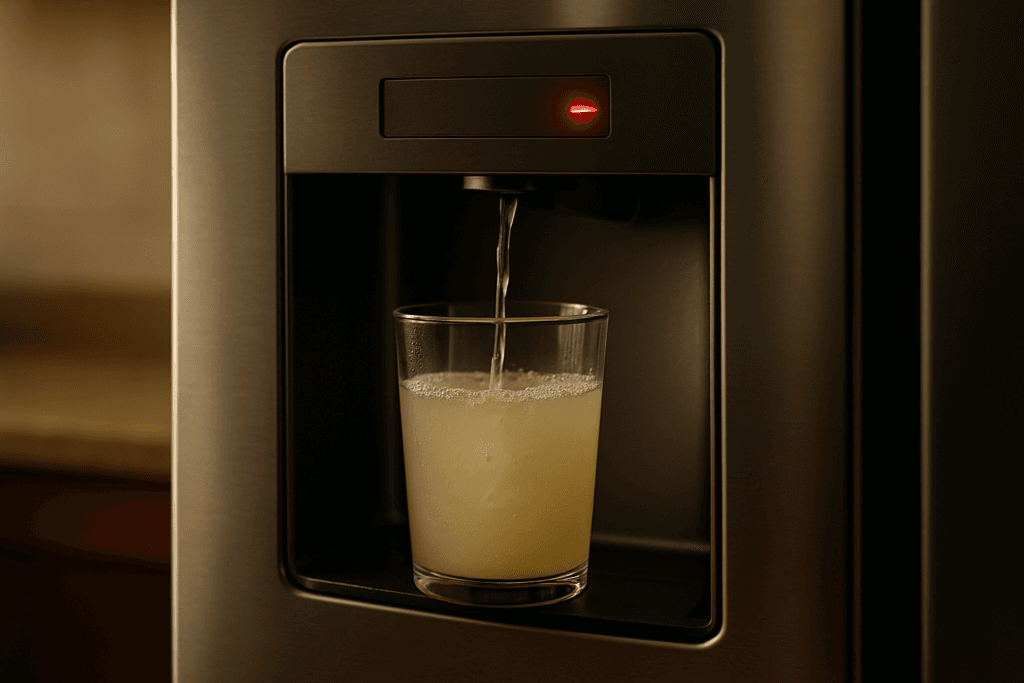
Five signs your refrigerator water filter needs replacing now — including signs the timer won’t catch. Don’t wait for water quality to suffer.
Five signs your refrigerator water filter needs replacing now — including signs the timer won’t catch. Don’t wait for water quality to suffer.
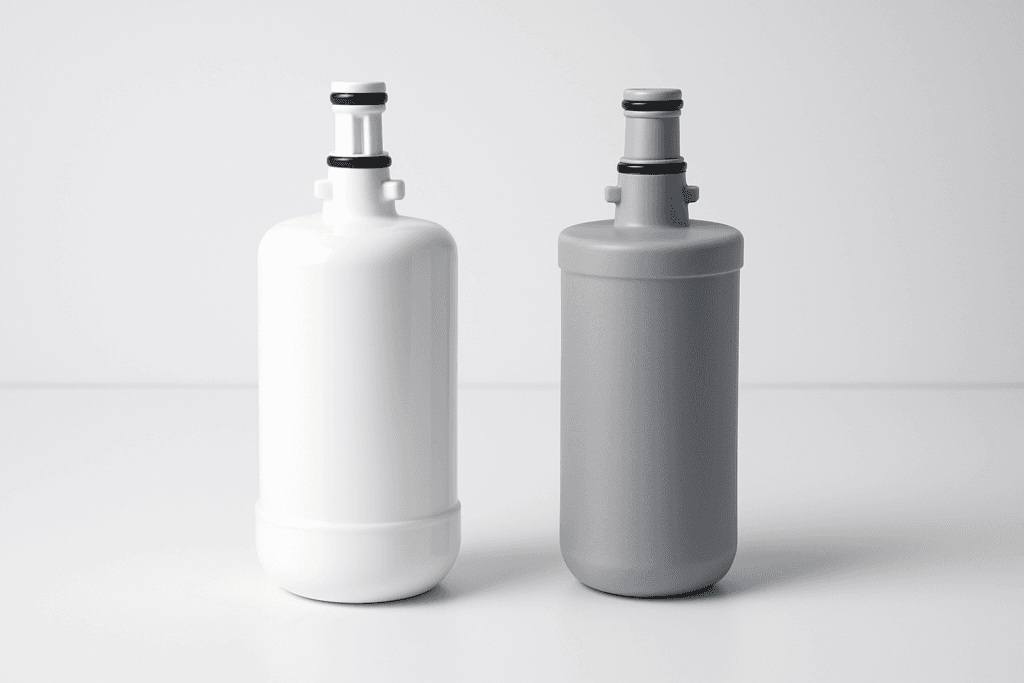
Generic vs OEM refrigerator water filters — are they the same? The honest answer depends on NSF certifications. Here’s how to choose safely and smartly.
Best Samsung DA29-00020B (HAF-CIN) compatible refrigerator water filter for 2026. NSF/ANSI 42 + 53 certified, $23.99 vs $50 Samsung OEM. Fits 100+ Samsung french-door and side-by-side fridges. Compatibility list and buyer’s checklist.
LG LT700P, LT800P and LT1000P refrigerator filter comparison. Decision chart by filter location and fridge year, Kenmore equivalents (9690, 9490, 9980) and the ADQ cross-reference table.
Are aftermarket compatible refrigerator water filters safe? The honest answer with science: how NSF/ANSI certification works, what to look for, and the marketing tricks to avoid in 2026.
[1]
Yes — but only if certified. Here’s how to tell the legit cartridges from the bulk-import junk in 60 seconds.
Yes — properly NSF/ANSI 42 + 53 certified compatible filters are as safe as OEM. They use the same activated carbon block media. The catch: ~70% of “compatible” filters on Amazon and Walmart are NOT actually NSF certified. Below: how to verify, what marketing tricks hide, and what NSF certification actually proves.
A refrigerator water filter is fundamentally simple technology: water flows through a cylinder of compressed activated carbon. The carbon adsorbs (binds) chlorine, organic compounds, lead and other contaminants while letting water through. The OEM cartridge from Whirlpool, GE, Samsung, etc. uses exactly the same activated carbon as a generic compatible — often produced in the same Asian factories.
What differs between OEM and compatible:
NSF International is an independent, accredited US lab (founded 1944, no government affiliation) that physically tests filters against published standards. To get certified, a filter must:
Filters that pass get an NSF certificate number you can verify at info.nsf.org/Certified/DWTU. Look up the manufacturer + model — if it’s not in the database, it’s not actually certified.
No. The federal Magnuson-Moss Warranty Act (1975) explicitly prohibits manufacturers from voiding your warranty just because you used a third-party part. Whirlpool, GE, Samsung, etc. can refuse warranty service only if they can prove the aftermarket filter caused the failure — which is essentially impossible for a passive filter cartridge.
Manufacturers love to imply otherwise in their marketing (“only OEM filters preserve your warranty”), but it’s a scare tactic. Read your warranty fine print — it almost certainly doesn’t actually require OEM filters.
For most kitchens, NSF-certified compatibles are the smart financial pick. But there are 4 cases where OEM makes sense:
NSF-certified compatible refrigerator filters are safe, effective, and represent the best value for 95% of US households. The 5% edge case where OEM matters: RFID-paired fridges, luxury brands under warranty, or specific PFAS/pharmaceutical filtration needs.
The risk isn’t “compatible vs OEM” — it’s “certified vs uncertified”. A $3 Amazon mystery cartridge with no NSF cert is genuinely dangerous and should be avoided. A $12-15 NSF/ANSI 42 + 53 certified compatible from a reputable seller delivers identical filtration to a $48 OEM. We sell only the latter.
Confused by everydrop EDR1, EDR2, EDR3, EDR4, EDR5 and Filter A? Decision guide by filter location, legacy part number cross-reference (W10295370A, UKF8001, 4396841) and install steps.
PFAS detected in about 45% of US tap water per USGS. Which NSF-certified refrigerator filters actually reduce forever chemicals (PFOA, PFOS), which certifications to demand, and which marketing claims to ignore.
MWF vs MSWF GE refrigerator filter comparison. Different cartridges, different fridges. How to identify which one your GE fridge needs in 10 seconds, plus what owners of 2019+ GE models should order instead.
Best EDR3RXD1 compatible refrigerator water filter for 2026. NSF/ANSI 42 + 53 certified, $21.99 vs $48 Whirlpool OEM. Fits Whirlpool, Maytag, Amana, KitchenAid, JennAir. Compatibility list + buyer’s checklist.
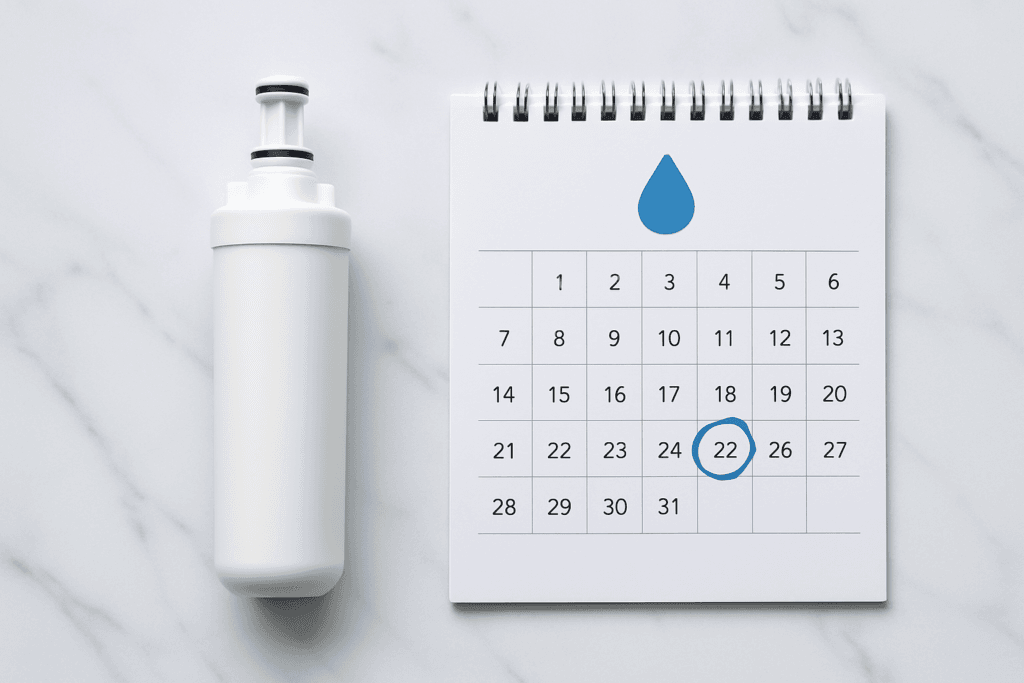
How long does a refrigerator water filter really last? The honest answer depends on your household size. Learn the signs it’s done and why timing matters.