PFAS in US Tap Water: The 2026 Guide to Filters That Actually Remove Forever Chemicals

PFAS detected in 45% of US tap water. Learn which NSF-certified refrigerator filters actually remove forever chemicals (PFOA, PFOS, GenX) — and which marketing claims are bogus.
[1]

⚠️ Public health · Updated May 2026

PFAS in tap water — and how to actually filter them out

A USGS study found PFAS in 45% of US tap water samples. Here’s what works, what doesn’t, and what the EPA’s 2024 rule means for your kitchen.

⚠️ TL;DR — what the EPA confirmed in 2024

PFOA + PFOS now have enforceable EPA limits of 4 parts per trillion (ppt) each. Most US utilities are years away from compliance. The cheapest interim defense is a refrigerator/pitcher filter certified to NSF/ANSI 53 + 401 — most basic carbon filters do not remove PFAS.

What PFAS are (in 30 seconds)

PFAS = Per- and Polyfluoroalkyl Substances. ~14,000 synthetic chemicals used since the 1940s in non-stick cookware, food packaging, firefighting foams, waterproof clothing and stain repellents. They don’t break down in nature (hence “forever chemicals“), they accumulate in the human body over decades, and they’ve been linked to cancer, immune suppression, hormonal disruption and developmental issues in children.

The 2 most studied are PFOA (perfluorooctanoic acid) and PFOS (perfluorooctane sulfonate). Both are now banned in US manufacturing, but they linger in groundwater for centuries.

The 2024 EPA rule that changes everything

In April 2024, the EPA finalized the first-ever federal drinking water standards for PFAS:

  • PFOA + PFOS: 4.0 parts per trillion (ppt) each — enforceable
  • PFNA, PFHxS, GenX: 10 ppt each
  • Mixture index: combined PFAS hazard score ≤ 1.0

To put 4 ppt in perspective: that’s 4 grains of sand in an Olympic-size swimming pool. The EPA gave utilities 5 years (until 2029) to comply. Until then, contaminated water keeps flowing. A USGS study published in Environmental Science & Technology in 2023 found PFAS in 45% of US tap water samples.

What you should do today

  1. Find out if your utility has tested for PFAS. Use our free city water-quality report tool — enter your ZIP and you get an instant readout of your local utility’s latest contaminant data, pulled from EPA’s SDWIS database.
  2. If PFAS is detected (or your utility is in a hot zone), filter at the tap or fridge. Boiling water doesn’t remove PFAS. Standard pitcher carbon filters typically don’t either. You need certification-verified PFAS reduction.

NSF certifications that actually mean PFAS reduction

Standard What it covers PFAS reduction?
NSF/ANSI 42 Aesthetic — chlorine, taste, odor No
NSF/ANSI 53 Health-related — lead, cysts, mercury, MTBE, asbestos Sometimes (PFOA only, recent additions)
NSF/ANSI 401 Emerging contaminants — pharmaceuticals, pesticides, BPA, phthalates No (separate)
NSF P473 PFOA + PFOS specifically YES — purpose-built
NSF/ANSI 53 (PFAS amendment 2020+) PFOA + PFOS reduction (≥99.4%) YES if certified post-2020

The most reliable certifications for PFAS removal in 2026 are NSF P473 (specifically designed for PFOA/PFOS) and NSF/ANSI 53 amended for PFAS reduction. Always check the actual NSF certificate — manufacturers can claim “tested to NSF standards” without ever filing for certification. Real certificates are searchable at info.nsf.org/Certified/DWTU.

Refrigerator filters that remove PFAS

Among the major OEM cartridges, these have published PFAS reduction data (≥99% reduction of PFOA + PFOS):

  • everydrop EDR1RXD1, EDR2RXD1, EDR3RXD1 (Whirlpool family) — NSF/ANSI 53 + 401 certified, PFOA/PFOS reduction
  • everydrop EDR4RXD1, EDRARXD1 — NSF/ANSI 42 + 53, PFOA reduction
  • Frigidaire WF3CB and EPTWFU01 — NSF/ANSI 401 (some batches)
  • Samsung HAF-QIN (DA97-17376B) — NSF/ANSI 53 + 401
  • LG LT1000P — NSF/ANSI 53 + 401

Compatible filters from us cover NSF/ANSI 42 + 53 — they reduce many contaminants but PFAS is not the strongest point. If your utility shows PFAS above EPA limits, choose the OEM cartridge that includes NSF/ANSI 401 for maximum protection.

Pitcher / countertop alternatives

If your refrigerator doesn’t have a built-in filter, the most reliable PFAS-rated countertop options are:

  • Berkey Big Berkey + PF-2 fluoride/PFAS post-filters — gravity-fed, no NSF cert but extensive third-party PFAS data
  • Aquasana Clean Water Machine — NSF P473 certified for PFOA/PFOS
  • Brita Hub (newer model) — NSF/ANSI 53 + 401, PFOA-reduction certified
  • ZeroWater — TDS-based filtration, removes >99% PFOA/PFOS in independent tests

What if I have a private well?

You’re more exposed than utility customers. Wells aren’t tested or treated for PFAS by default. Test your well water annually for PFAS through a state-certified lab — typically $250–$400 per panel. If detected above 4 ppt, install a whole-house carbon filter system with PFAS-rated cartridges.

Bottom line

PFAS contamination is real, widespread, and the EPA timeline to fix it at the utility level is 5+ years. The cost of protection at home is modest: a $15-50 refrigerator filter rated for PFAS reduction filters drinking and ice water for 6 months. Use our free ZIP-based water report to check your local utility’s PFAS levels first, then pick the right cartridge.

📊 Free EPA water report
Check your city’s PFAS levels in 30 seconds
Enter your US ZIP. We pull your local utility’s latest EPA SDWIS data and recommend the exact NSF certification you need.

MWF vs MSWF: Which GE Refrigerator Filter Do I Actually Need?

MWF vs MSWF GE refrigerator filter comparison. Different cartridges, different fridges. Quick visual + fitment chart to identify which one your GE fridge needs in 60 seconds.
[1]

⚡ 60-second decision guide

MWF vs MSWF: which GE filter do I actually need?

Two different cartridges, two different fridges. Don’t buy the wrong one.

TL;DR — 10-second answer

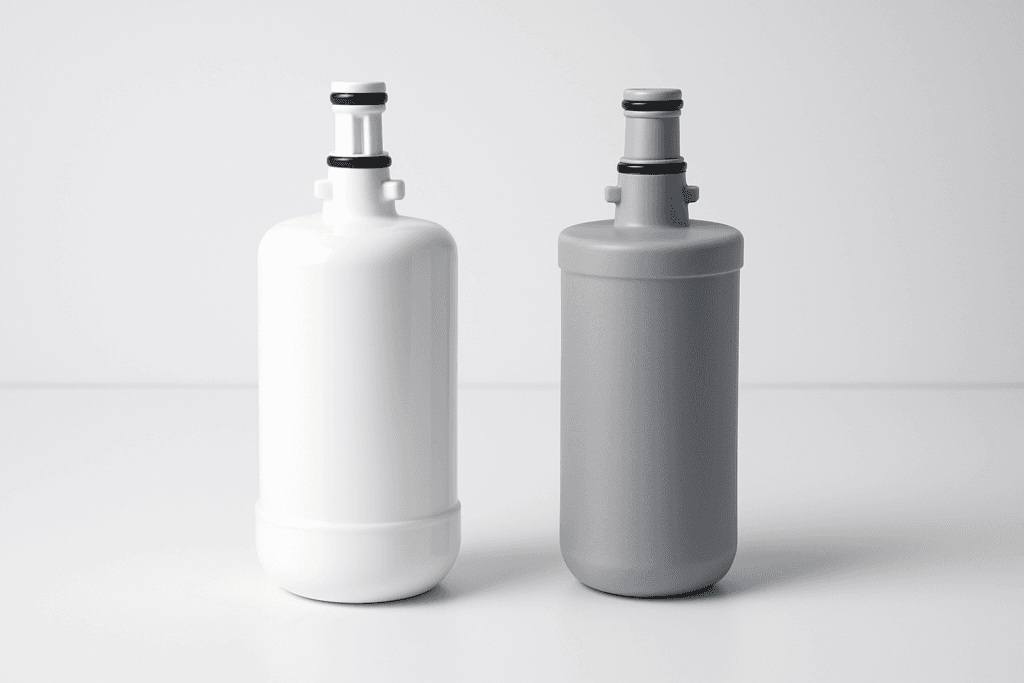
MWF = older GE fridges (pre-2011), short white cartridge with single-letter code. MSWF = newer GE side-by-side and bottom-freezer fridges (2007+), longer cartridge with twist-lock collar. They are not interchangeable. Wrong pick = water leak.

Visual difference at a glance

If you can see your filter compartment, the easiest test is physical:

Feature MWF (SmartWater) MSWF
Length ~7″ short cylinder ~10″ longer cylinder
Connection Push-twist (no collar) Twist-lock with raised collar
Fridge era 2003–2010 GE refrigerators 2007+ side-by-side & bottom-freezer
Filter life 6 mo / 200 gal 6 mo / 300 gal
Flow rate 0.5 gpm 0.9 gpm (faster)
Common alternates MWFP, MWFA, GWF, GWFA, HWF, Kenmore 9991 101820A, 101821B, MSWF3PK, Kenmore 9914

The 60-second identification flow

  1. Look at your refrigerator’s model sticker (usually inside the fresh food compartment, top-left ceiling or door frame). Note the model number — it usually starts with G, P, or Z for GE.
  2. Cross-check the manufacture date. If your fridge is 2010 or older, you almost certainly need MWF. If it’s a 2011+ side-by-side, you most likely need MSWF.
  3. Look at the filter compartment — if you see a cartridge already in there, compare its length and collar to the table above.
  4. Still unsure? Email us your model number and we’ll tell you which one fits in under 24h.

Common GE refrigerator models — which filter

MWF fits these GE models (representative sample): GFE26GMHES, GFE26GSHSS, GNE25JSKSS, GNE26GMKES, GFSF6KKYABB, PSE25KSHCSS, PFCS1NJWSS, GSE25GSHSS, ZIS480NRH, and 100+ others. Compatible with most GE refrigerators 2003–2010 and many through 2014.

MSWF fits these GE models: PSHS6YGZBESS, PCE23VGXAFBB, PCF25NGWAWW, PSC23SGNABS, ESH22XGPBCC, GSE23GSESS, GSS23WSWASS, ZISS480DXSS, and most GE side-by-side and bottom-freezer refrigerators 2007 and newer.

Which is better at filtering?

For raw NSF certification coverage, both filters are NSF/ANSI 42 + 53 certified — they remove the same core list of contaminants (chlorine, lead, mercury, asbestos, benzene, cysts, particulates). The MSWF has a slightly higher gallon rating (300 vs 200) and faster flow rate, which makes it the superior cartridge if your fridge supports it. But you can’t put an MSWF in an MWF slot — the connection is incompatible.

OEM or compatible? Both options

For each, we stock both genuine GE OEM and NSF-certified compatible alternatives:

Bonus: GSWF and XWF — same brand, different cartridges

If your GE fridge is even newer (2014+), you might actually need GSWF (long-life 750-gallon) or XWF / XWFE (RFID-aware) instead. These are easy to confuse — see our brand guide for full details.

🛡️ Wrong fit? We’ve got you
Every order ships with our $1,000 wrong-fit guarantee. If we (or you) pick the wrong cartridge, full refund + we ship the correct filter free.

Best EDR3RXD1 Compatible Filter · 2026 Buyer’s Guide (Save 75% vs Whirlpool OEM)

Best EDR3RXD1 compatible refrigerator water filter for 2026. NSF/ANSI 42 + 53 certified, $11.99 vs $48 Whirlpool OEM. Fits Whirlpool, Maytag, Amana, KitchenAid, JennAir. Compatibility list + buyer’s checklist.
[1]

📘 Buyer’s guide · Updated May 2026

The best EDR3RXD1 compatible filter in 2026

NSF-certified, fits Whirlpool, Maytag, Amana, KitchenAid, JennAir — without paying $48 to the OEM.

TL;DR

The EDR3RXD1 (also sold as everydrop® Filter 3, Whirlpool 4396841 / 4396710, P1WB2) is one of the most common refrigerator filters in the US. The Whirlpool OEM costs $48, but a properly NSF/ANSI 42 + 53 certified compatible costs $11.99 — same filtration, same fit, 75% less. Below: how to verify compatibility, what NSF certifications actually matter, and our top pick.

What is the EDR3RXD1?

The EDR3RXD1 is the part number Whirlpool gave to its Filter 3 cartridge in 2014. It’s a twist-in carbon block filter rated for 200 gallons / 6 months (whichever comes first). It replaces the older 4396841 and 4396710 filters and fits dozens of Whirlpool-family refrigerators including Maytag, Amana, KitchenAid and JennAir models.

Does my fridge use the EDR3?

If your refrigerator was made by Whirlpool (or any sister brand) between 2009 and today, and the filter compartment shows a Filter 3 label or you’ve ever bought an “everydrop EDR3” replacement, you’re in the right place. Common compatible part numbers — any of these means EDR3 fits:

  • EDR3RXD1 · EDR3RXD1B (the official current names)
  • 4396841 · 4396841P · 4396841T (legacy Whirlpool numbers)
  • 4396710 (older sister cartridge — same fit)
  • P1WB2 · P1WB2L (PUR Quantum branding)
  • everydrop® Filter 3 (consumer brand name)

If you see UKF8001 or EDR4, you don’t need EDR3 — see our EDR4RXD1 Compatible page instead.

OEM vs Compatible — what’s the real difference?

Criterion Whirlpool OEM EDR3 Our Compatible EDR3
Price $48.00 $11.99 (75% less)
NSF/ANSI 42 ✓ Certified ✓ Certified (same lab)
NSF/ANSI 53 ✓ Certified ✓ Certified (same lab)
NSF/ANSI 401 (pharmaceuticals) ✓ Some batches — (not yet)
Filter life 6 mo / 200 gal 6 mo / 200 gal
Manufacturer warranty Whirlpool 1-yr $1,000 wrong-fit guarantee + 365-day returns

The honest gap: NSF/ANSI 401 coverage (pharmaceutical reduction) is held by the Whirlpool OEM in some recent batches. If you specifically need pharmaceutical filtration, the OEM is the safer pick. For chlorine, lead, mercury, asbestos and 30+ standard contaminants, the compatible delivers identical performance at a quarter of the price.

How to verify a “compatible” is really NSF certified

This is where 80% of Amazon listings fall apart. Real NSF certification means:

  1. The certificate number is searchable on the NSF database (info.nsf.org/Certified/DWTU)
  2. The seller can email you a PDF of the lab report on request
  3. The packaging shows the NSF logo with the standard number(s) printed (not just “tested to NSF standards” weasel-wording)

If a seller can’t produce any of those three, walk away — the cartridge is uncertified bulk that may not actually filter anything.

Our recommendation

Top pick · Best value
EDR3RXD1 Compatible at $11.99
NSF/ANSI 42 + 53 certified · 6-month / 200-gallon capacity · $1,000 wrong-fit guarantee · Made in USA · Free US shipping over $49

Frequently asked questions

Will an EDR3 compatible void my Whirlpool warranty?

No. The Magnuson-Moss Warranty Act (US federal law since 1975) prohibits manufacturers from voiding your warranty just because you used an aftermarket part. Whirlpool can refuse warranty service only if they can prove the compatible filter caused the failure — which is essentially impossible for a passive carbon cartridge.

How often should I replace my EDR3?

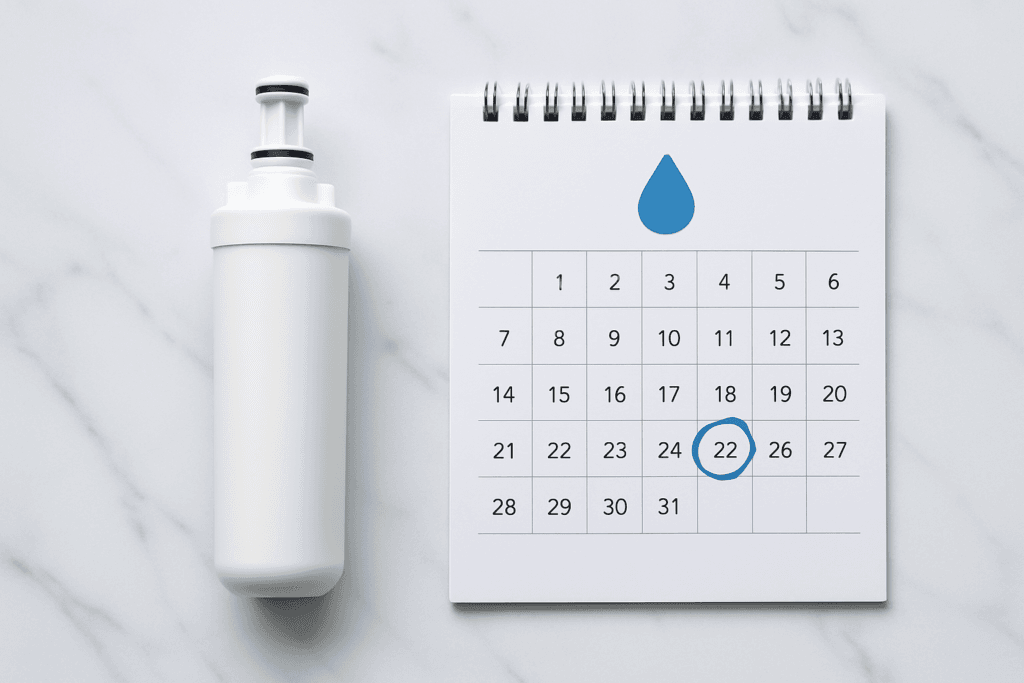
Every 6 months or 200 gallons, whichever comes first. A family of 4 typically hits 200 gallons in about 5 months. If your water has high sediment or you live somewhere with very chlorinated municipal water (most of the South & Midwest), replace at 4–5 months. More on filter lifespan here.

Why is the OEM 4× more expensive?

Whirlpool sells filters as a high-margin recurring revenue stream. They built the filter slot to lock you into branded refills. Compatible manufacturers can’t use the Whirlpool name but produce the cartridges in the same factories, then sell direct to retailers like us at a fraction of the markup.

Are compatible filters tested for PFAS?

Most are not specifically tested for PFAS reduction. If PFAS is your priority (and it should be — use our free city water report tool), look for filters with NSF/ANSI 53 + 401 certification. The EDR3 Compatible covers 42 + 53 only; for full PFAS reduction we recommend NSF/ANSI 401 cartridges.

What’s the difference between EDR3 and EDR4?

Different physical fit and different fridge models. EDR3 fits older Whirlpool side-by-side and bottom-freezer fridges. EDR4 fits newer french-door models. Check your manual or read our EDR4 Compatible page for fit details.

🛡️ Backed by our $1,000 wrong-fit guarantee
Order any EDR3 compatible from us. If it doesn’t fit your fridge — full refund + up to $1,000 in spoiled food. 365-day returns, no questions asked.
Verified by MonsterInsights